How to Pitch Stakeholders on AI Tools Without Losing Trust
Your stakeholders are asking about AI, and you're about to tell them why it's risky.
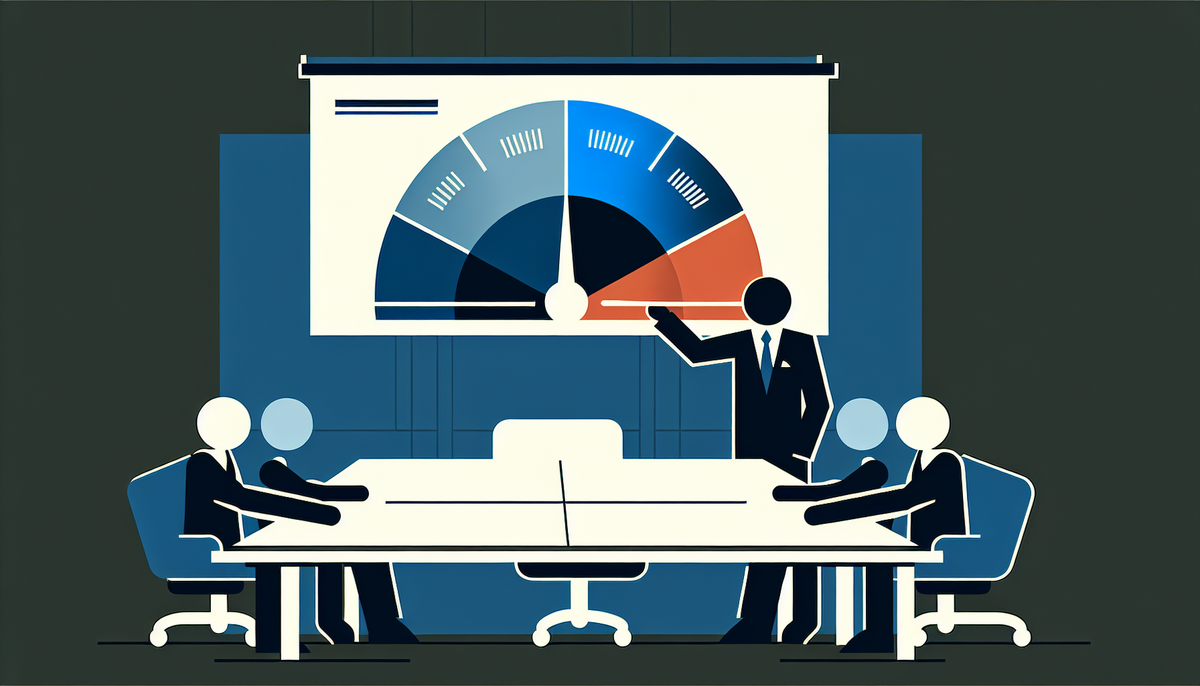
Your stakeholders are asking about AI, and you're about to tell them why it's risky. The moment you do, something shifts in the room. You see it in their faces: the confidence drains. They start asking whether you should be using it at all. And suddenly you're defending a decision you haven't even made yet, and your credibility takes a hit because you sounded like you were warning them away from something rather than managing it.
This is the real problem: most project managers frame AI risks as warnings instead of inputs. You walk into a steering committee and talk about hallucinations, data security, or integration complexity like you're announcing a threat that might derail the project. What you actually communicate is that you haven't figured out how to handle it yet. That is not what a confident PM sounds like.
Here is the honest truth: stakeholders do not lose trust because you name risks. They lose trust because you name risks without naming how you are going to manage them. The gap is not between acknowledging AI risk and staying silent about it. The gap is between presenting risk as a problem you have not solved and presenting risk as a variable you have already factored into your delivery plan.
This is fundamentally a governance and stakeholder management problem, and it is exactly what you are trained to handle. You manage budget risk, resource risk, dependency risk, and timeline risk every day. AI risk follows the same logic. But the language is new, the risk categories are unfamiliar, and you do not yet have a standard way to talk about it. That is what needs to change.
Start here: stop treating AI as a special category. Fold it into your existing risk framework. You already have a RAID log or a risk register or some version of it. You already know how to assign probability and impact, define mitigation owners, and track remediation. Use those same structures for AI. The moment you do, the conversation shifts from "Is this safe?" to "How are we managing this?" That is a conversation a PM leads, not one a PM survives.
The second move is specificity. Vague risk creates fear. Clear risk creates plans. If you tell a steering committee "AI could hallucinate," they hear a threat they cannot evaluate. If you tell them "The document summarization function in our project intake workflow has a 3 percent error rate based on our test run with 50 documents, we are adding a manual review gate before it feeds into our risk register, and we are tracking that gate failure as a KPI," they hear competence. You have named the risk, quantified it, built a control around it, and made it visible. That is the narrative a stakeholder believes.
The third move is customization. Your CFO, your product lead, and your client all need to hear about AI risk, but they need to hear different things. A CFO wants to know whether AI is adding cost or saving it, and what the downside looks like if something goes wrong. A technical lead wants to know whether the integration is stable and whether it is going to create new dependency chains. A client wants to know whether their data is safe and whether the timeline is actually shorter or if you are just shifting risk downstream. Map your stakeholders, then build three separate narratives. This is not manipulation. This is respecting that different people have different reasons to care.
Now move this into your actual governance rhythm. If you are running a steering committee, put one AI decision point on the agenda per month. Not a speech about risk. A decision. "We are going to use Claude for project summary generation, here is how we tested it, here is the control we built around the output, here is the failure mode we are tracking, and here is who owns that tracking." Present it as a decision, not a debate. Decisions feel like movement. Debates feel like delay.
Document all of this. Use your existing project documentation tools, such as Confluence, Notion, whatever you have. Create a one-page AI risk profile for your project. Name the AI tools or functions you are using or testing. For each one, write: what it does, what the main risk is, how you are mitigating that risk, who is accountable for the mitigation, and what metric you are tracking to know if the mitigation is working. Update it every sprint or every month. Share it with stakeholders on your regular cadence. Make it boring and routine. That is exactly what you want.
The conversation you want to have is not "Should we use AI?" It is "We are using AI in these three ways, we have built controls around each one, and here is how you will know if they are working." You will sound like a PM who has thought about this. You will sound like someone who is managing the risk rather than hoping it goes away.
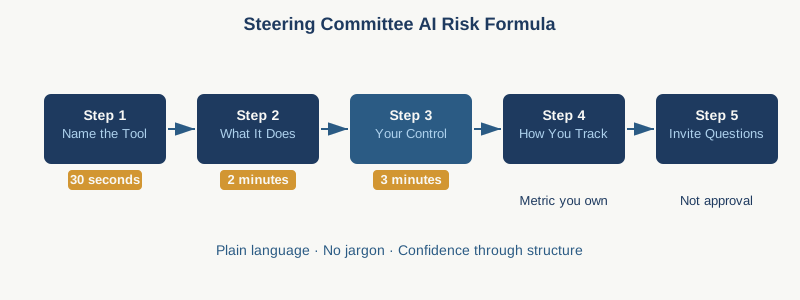
Try this in your next steering committee. Name one AI tool your team is using or testing. Spend two minutes on what it does. Spend three minutes on your control and how you are tracking it. Ask for questions, not approval. See what happens when you lead with confidence instead of caution.
Practical AI intelligence for project managers. Weekly, free. Get frameworks, tools, and decisions that help you stay ahead of AI adoption on your projects. No hype. No filler. Subscribe free →
Not sure which AI tools to trust on your projects? Download the free AI Tool Evaluation Checklist: 12 questions PMs ask before approving any AI tool for their team. Download free →