Before You Approve AI Work, Fix Your Governance Gap
Your team ships features in weeks now. Features that would have taken months two years ago.
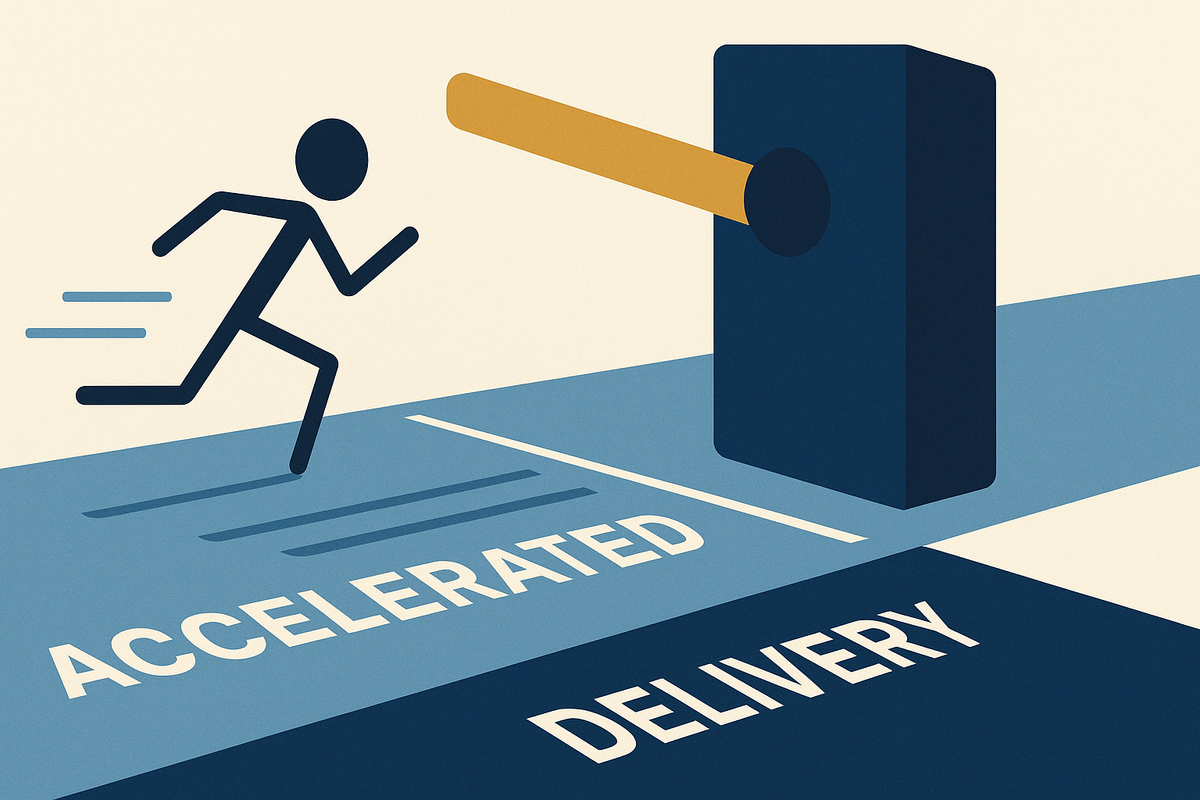
Your team ships features in weeks now. Features that would have taken months two years ago. AI coding tools shortened the cycle. But your approval process didn't.
This is the gap that matters for project managers right now. Development velocity jumped 3 to 5 times in some organizations. Governance stayed the same. When your team can prototype, test, and ship faster than your steering committee can review and approve, you have a real delivery problem. It looks like bottleneck. It feels like bureaucracy. But it's actually a sign that your risk and approval framework was built for a slower world.
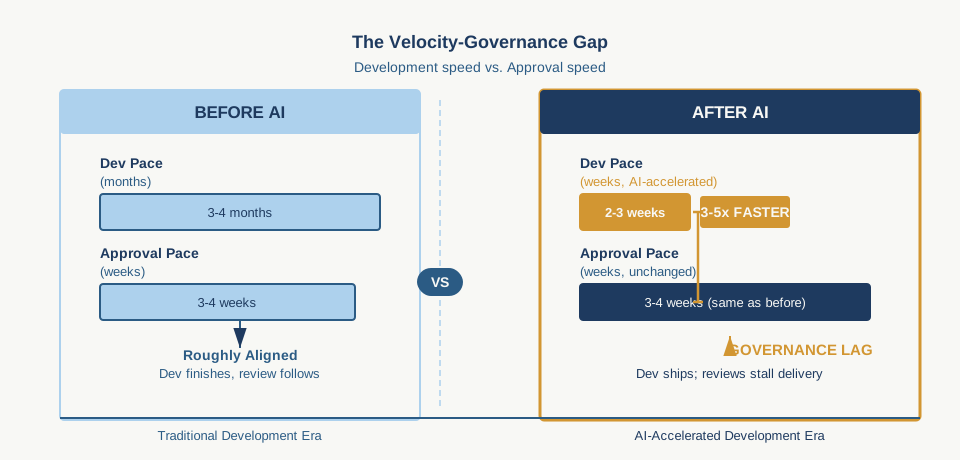
Here's what's broken: Enterprise governance assumes time is a quality control mechanism. You approve it Thursday, it gets built next week, you review it the week after. Delays are baked in, and most organizations treated those delays as acceptable because they also prevented bad decisions from moving too fast. Now, AI has removed the time component from development. Your team doesn't need a week to build something. They need a day. Sometimes a few hours. But your change control board still meets monthly. Your code review process still assumes manual inspection. Your compliance checklist still runs on a quarterly audit cycle. The machinery of approval has not matched the new speed of delivery.
The cost problem makes it worse. AI development tools are cheap. Running an extra review meeting is expensive in terms of opportunity cost and team frustration. So organizations face a real choice: modernize governance to match AI-driven velocity, or accept that your controls are now a tax on delivery. Most are choosing the latter without realizing it.
As a project manager, this affects you in three immediate ways.
First, your timeline visibility is collapsing. You used to know that a feature request would follow a predictable path: specification, estimation, development sprint, review, deployment. Each step had a predictable duration. Now the development step is 70 percent faster, but nothing else changed. Your team estimates a feature at two weeks. You tell stakeholders two weeks. Development finishes in four days. Then it sits for ten days in a governance queue you don't own. Stakeholders see it as delay. You look ineffective. The problem is not your team's speed. It's that your approval rhythm doesn't match your delivery rhythm.
Second, your risk visibility has actually gotten worse, not better. When development was slower, project managers had natural checkpoints to assess code quality, security assumptions, and whether the build matched the original intent. Now code is shipping faster than you can evaluate it. Many organizations have responded by adding more formal reviews, more documentation, stricter handoffs. This sounds like control. It's actually bureaucracy masking blindness. You're adding process in places where you need automation and real-time visibility instead.
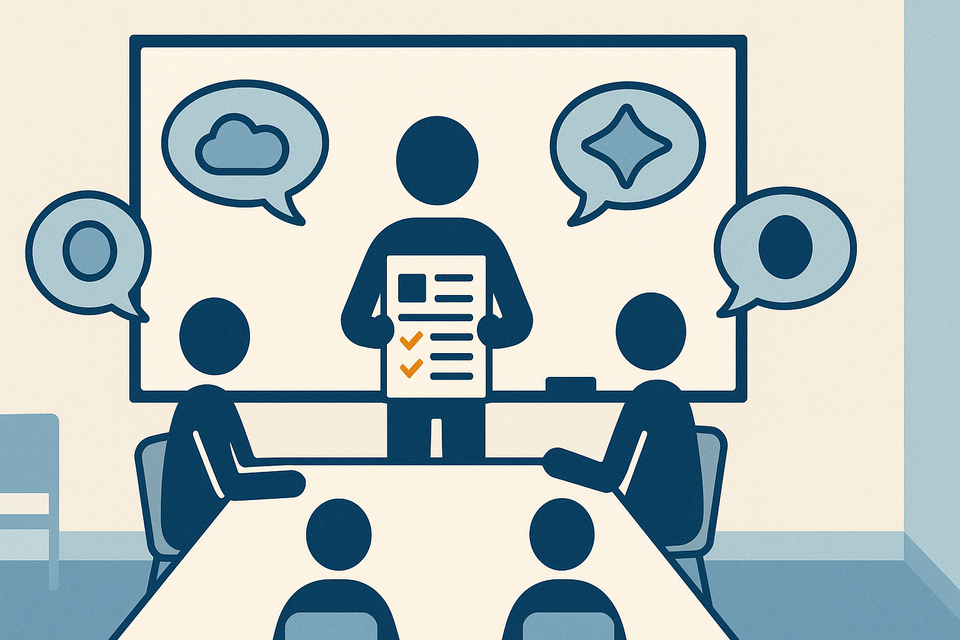
Third, your stakeholder communication is out of sync with reality. You're reporting on sprints and milestones built for the old cycle. Stakeholders see features shipping from your team in shorter timeframes but can't understand why approval still takes weeks. They assume either your governance is broken or you're exaggerating how fast development really is.
So what does a PM actually do about this?
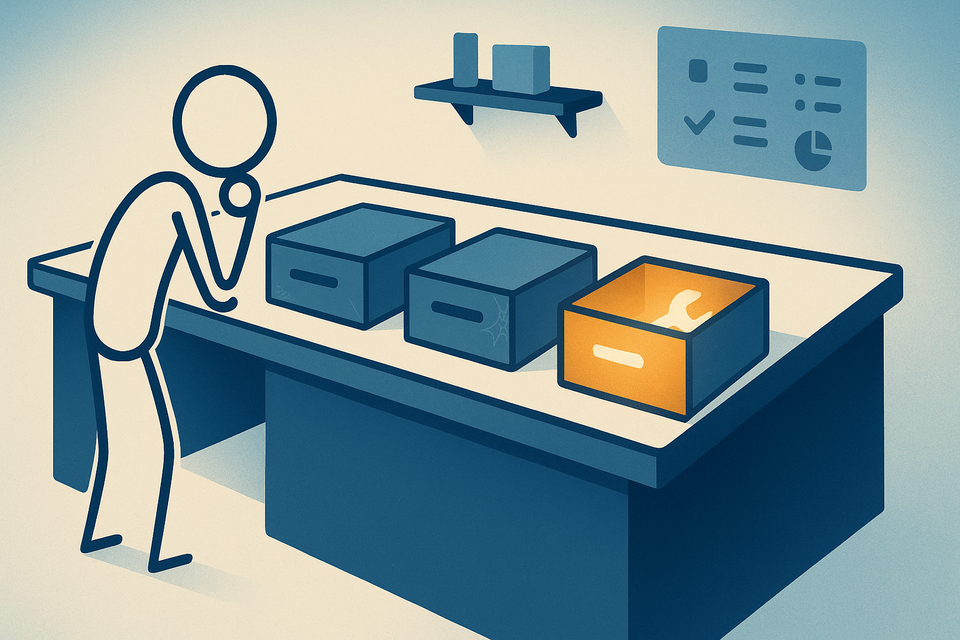
Start with a single, honest question: What is your approval bottleneck really protecting against? Not what you think it should protect against. What does it actually catch or prevent? Write down three recent change requests. Trace how long each one spent in approval versus development. Look at the time between when development was technically done and when stakeholders saw it working. That gap is your governance tax.
Next, separate approval into two categories: real risk and ritual. Real risk is something that, if wrong, creates measurable harm: security vulnerability, data loss, regulatory violation, customer impact. Ritual is something you approve because you always have, because the template includes it, because the process says you have to. Kill the ritual approvals. Simplify the real risk ones.
For real risk items, push approval leftward into development. Not after deployment. Not after code review. During design. Before code even exists. Ask your development lead this: What would help you get stakeholder confidence earlier? The answer is usually not another meeting. It's usually a prototype, a walkthrough, or a specific question answered in writing by the person who matters. Do that.
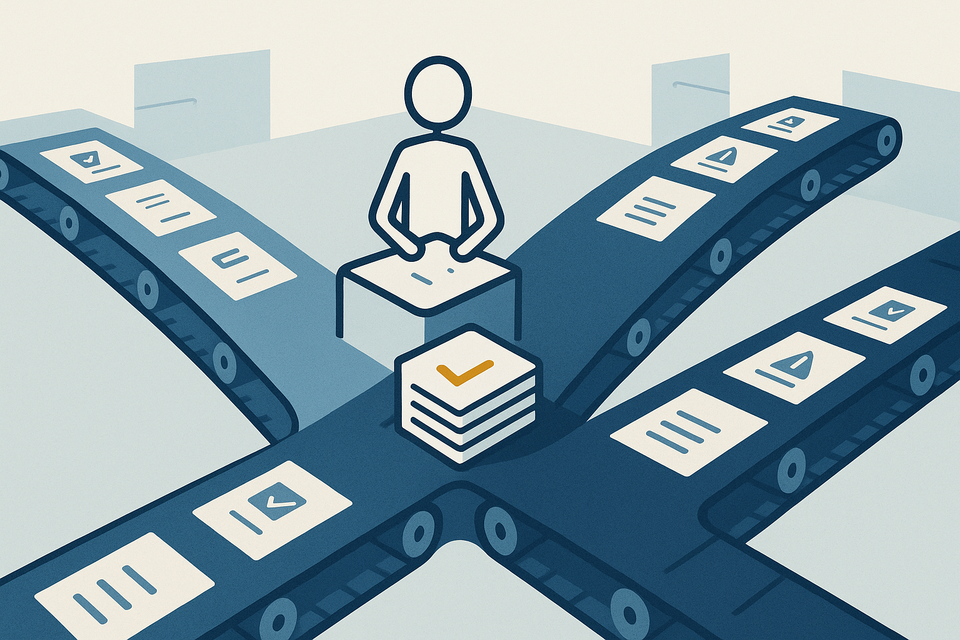
For the governance pieces that cannot move, make them async and automated. Code review, compliance scanning, security checks. These should not wait for a meeting. They should run continuously. Tools exist for this. Ask your development team which ones they need.
Then reset stakeholder expectations. Tell them the truth: Your team can now build something in four days. Approval takes ten. We are moving approval into the design phase so you see it working before it ships. This changes when you see things, but it does not change how safe they are. Better: it actually makes them safer because you're reviewing intent before code, not code after it's been built.
One warning: Do not solve this by removing all governance. That is the opposite problem, and it costs you in different ways. The goal is to move governance to the speed of delivery, not to pretend governance does not matter.
Pick one non-critical feature in the next sprint. Run it through a fast-track approval process. Put the review in the design phase. Use async tools for the technical checks. Measure the total time from request to shipped. Compare it to the same type of feature on your standard path. That one number will tell you exactly how much governance is slowing you down.
Practical AI intelligence for project managers. Weekly, free. Get frameworks, tools, and decisions that help you stay ahead of AI adoption on your projects. No hype. No filler. Subscribe free →
Not sure which AI tools to trust on your projects? Download the free AI Tool Evaluation Checklist: 12 questions PMs ask before approving any AI tool for their team. Download free →