Better AI Tools Will Not Solve Your Best AI Assisted PMs Problem
Most project managers use AI casually, then quit when the initial output disappoints. The real gains come from a disciplined 30-day onboarding: choose your costly bottleneck, build custom solutions, test AI beside the current process, measure time saved, and set clear data and approval guardrails.
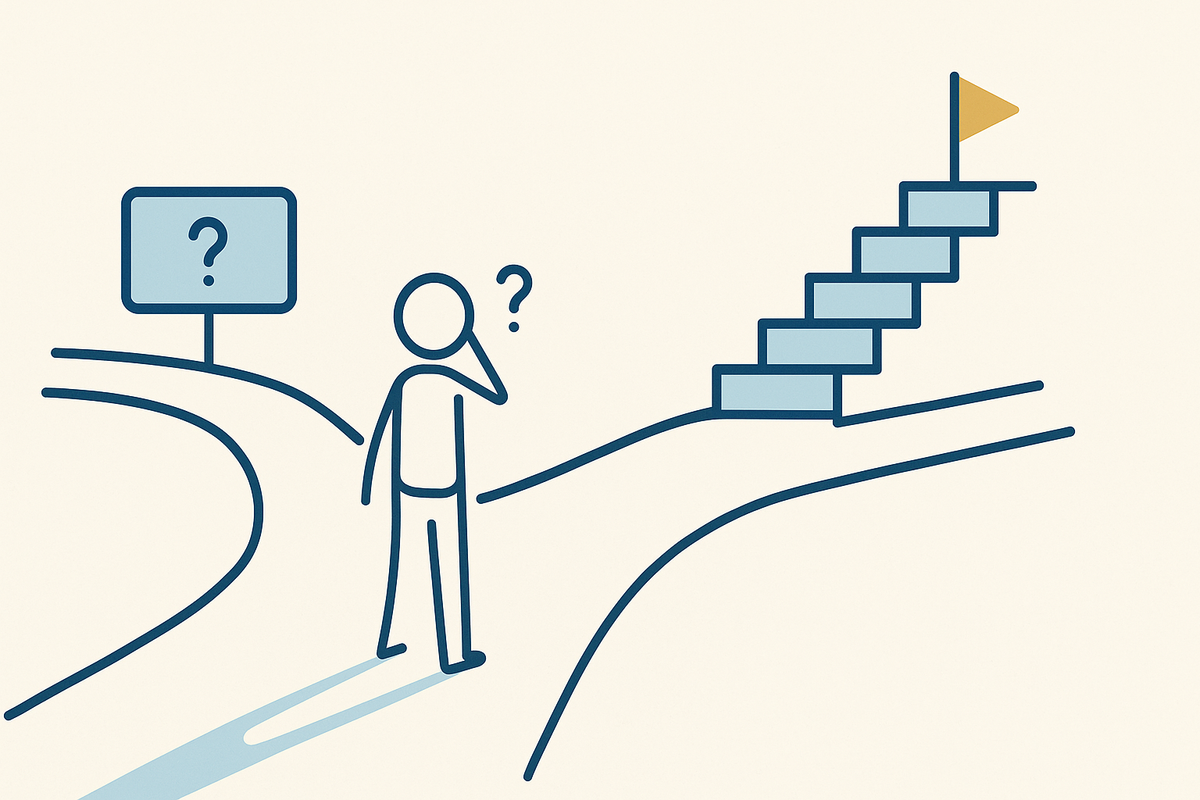
Most PMs jump into AI tools the way they jump into new software: they poke around for a week, find one feature that works, and then stop. They use it inconsistently. They don't trust the output. They miss the compounding wins that come from building actual workflows. And then they tell their manager that AI didn't really move the needle.
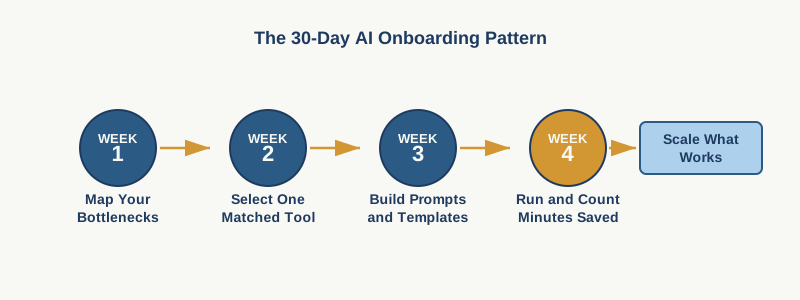
The ones who see real gains do something different in their first 30 days. They treat it like an onboarding phase, not a trial. They map their actual bottlenecks before they pick a tool. They build templates and prompts that fit how they actually talk about projects. They run new processes alongside old ones until they can see exactly where AI saves time and where it creates more work. They establish guardrails around what data goes in and who sees what comes out.
The gap is not between knowing AI exists and using it. The gap is between using it casually and using it in a way that changes how delivery actually works.
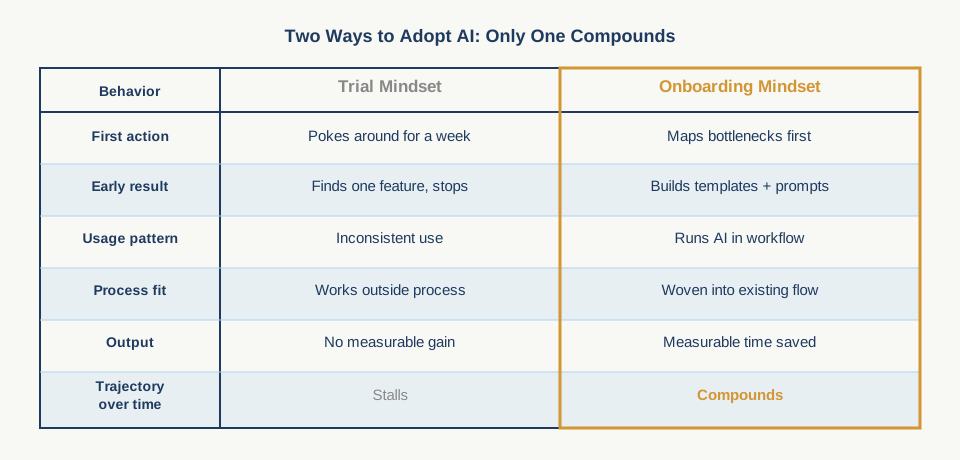
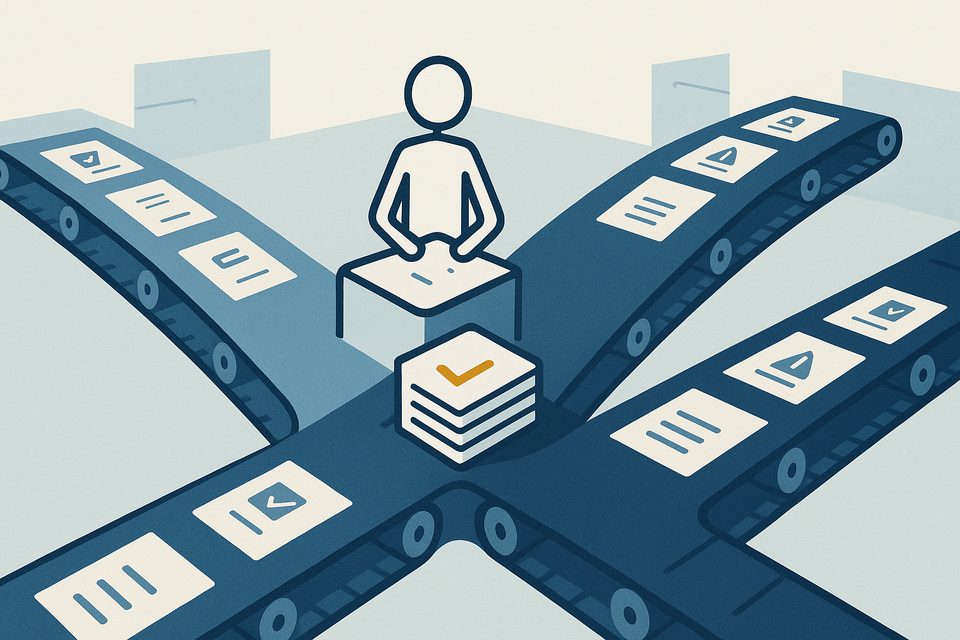
Here is what is actually broken in most PM workflows right now. Your current process for status reports, risk capture, scope documentation, and stakeholder updates is manual, slow, and dependent on you pulling information from seven different places and stitching it together. That process works. It's not efficient, but it works. The problem is you have zero incentive to change it because you already know the workarounds. So when you get access to an AI tool, you treat it like a convenience feature instead of a chance to rebuild the workflow entirely. You ask it to "summarize this" once, it hallucinates something weird, you lose trust, and you go back to doing it yourself. You never get to the version where AI is actually part of your system.
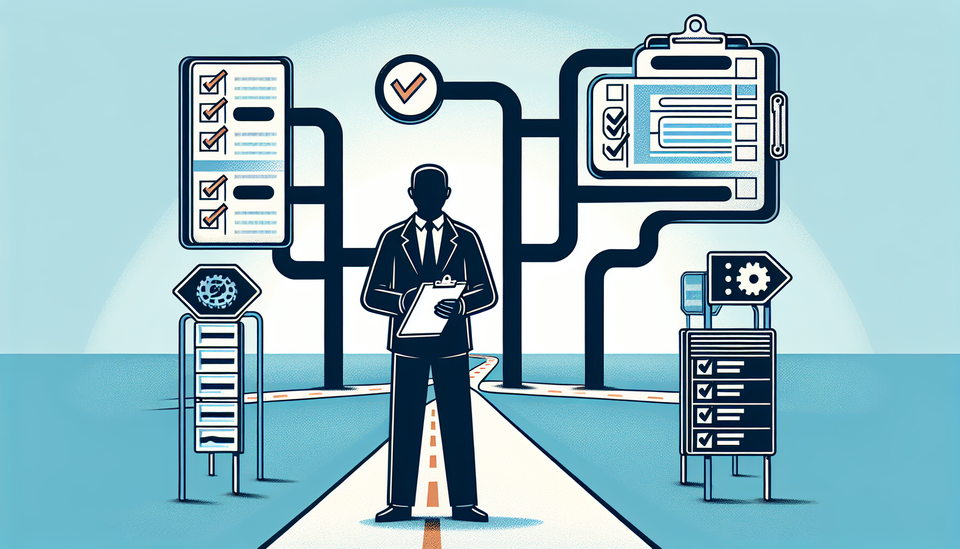
The best PMs invert this. They do not start with the tool. They start with the pain point.
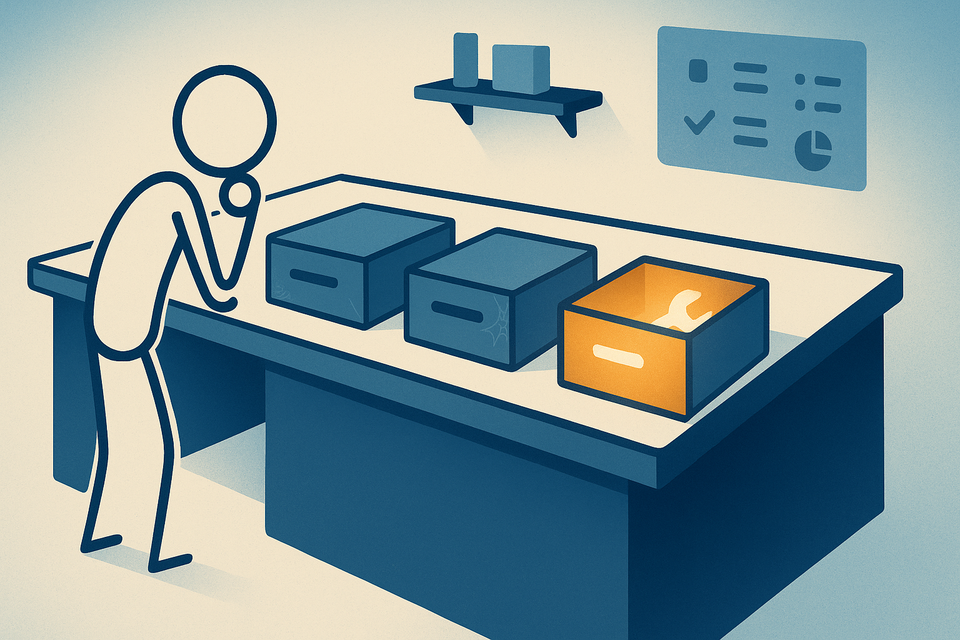
In the first week, they pick one bottleneck. Not all bottlenecks. One. Maybe it is your weekly steering committee status report, which takes three hours to assemble because you need updates from five teams, you have to translate them into your company's RAG language, and you have to surface the two or three things the committee actually cares about while burying the noise. Maybe it is scope creep documentation, where every change request comes in as a Slack message or a meeting comment, and you have to manually translate that into impact, cost, and timeline effect. Maybe it is the post-project lessons learned session, which nobody ever fills out properly, so you end up writing them yourself.
Pick the one that costs you the most time or creates the most friction between you and your stakeholders. That is your 30-day focus.
In week two, you build a custom prompt library specifically for that problem. This is not generic AI prompts you find on the internet. This is prompts that speak your language. If you manage projects with a specific risk taxonomy (technical, resource, schedule, external), your prompts should use that taxonomy so the AI output mirrors how you think. If your company talks about OKRs or uses a specific naming convention for project phases, your prompts should embed that. Spend three hours on this. Write five to eight prompts that cover the variations of the problem you are solving. Save them somewhere you can reuse them.
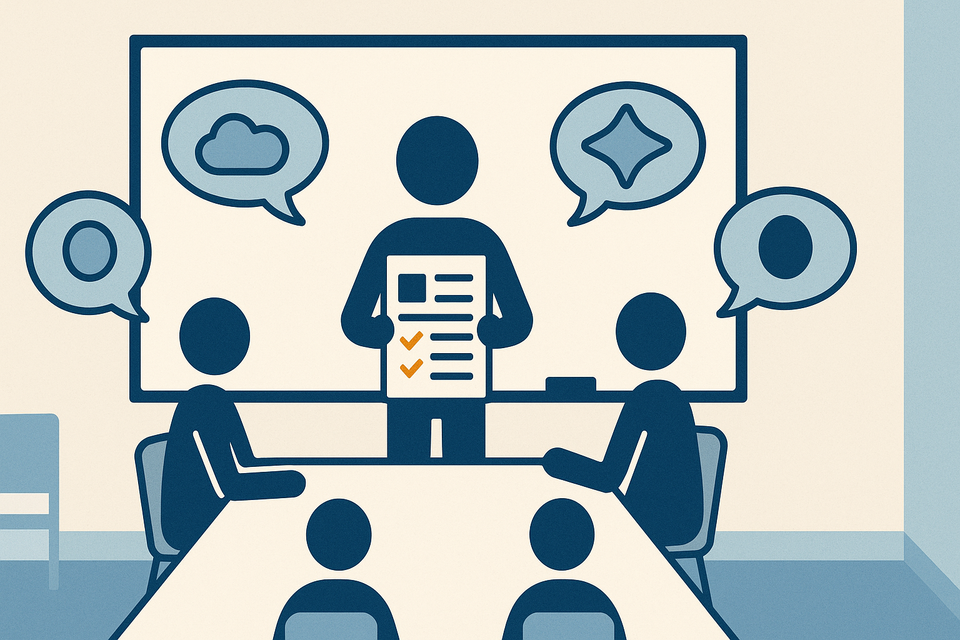
The third week is parallel processing. You run your new AI-assisted workflow alongside your old process. If you are trying to automate status reports, you build one the old way and one using AI. You compare them. You check for hallucinations. You look for gaps. You see what AI captures that you would have missed because it moves too fast. Most importantly, you get data on whether this actually saves time or just moves the problem around.
This is where trust builds. Not from marketing. From evidence.
By week four, you establish guardrails. What sensitive data never goes into the AI tool? Who needs to see and approve outputs before they go to stakeholders? What is your policy if AI generates something that is factually wrong? A steering committee will forgive a typo. They will not forgive a timeline projection that is wrong because an AI hallucinated a dependency. Define this now, in month one, and you prevent compliance or credibility problems later.
The tools themselves matter less than the discipline. You probably want one solid reasoning tool like Claude or ChatGPT for generating analysis and drafting text. You probably want one specialized PM assistant if your primary tools offer it (Notion AI, Monday.com AI, or Asana AI). And you probably want a documentation system like Confluence or Notion where you store your custom prompts and approved templates so your team can use them too.
But the tool is not the leverage point. The leverage point is knowing exactly what problem you are solving, having prompts that match your language, and running it in parallel until you have evidence it works.
Here is your 30-day test: pick your biggest PM pain point this week. Spend two hours building three custom prompts for it, or better yet, building a custom project. Run it once on real project data alongside your current process. Count how many manual minutes you saved. Then run it again on the next project. If you see five hours saved across two projects, you have found something worth systematizing across your whole delivery portfolio. If you see nothing, you have learned that pain point is not AI-friendly and you move to the next one. Either way, you stop guessing and start knowing.
Practical AI intelligence for project managers. Weekly, free. Get frameworks, tools, and decisions that help you stay ahead of AI adoption on your projects. No hype. No filler. Subscribe free →
Stop writing from scratch. Get the 20 prompts PMs actually use for status reports, stakeholder updates, and retro summaries. Download free →