Why AI Is Changing Scope Management Faster Than PMs Expect
Scope conversations used to be straightforward. You had a charter, a timeline, a budget, and a resource count.
Scope conversations used to be straightforward. You had a charter, a timeline, a budget, and a resource count. You negotiated the edges, documented what was in and what was out, and managed changes from there. Now someone mentions AI and the whole conversation breaks down because nobody actually knows what's possible, how reliable it is, or what it will cost in time to integrate.
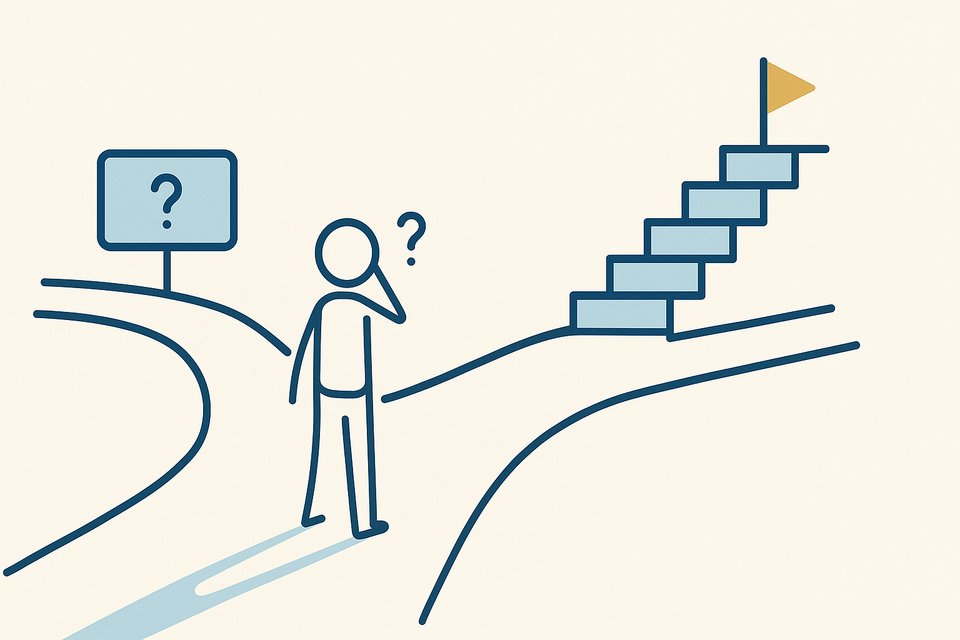
This is the scope problem nobody is talking about yet. It's not that AI adds work. It's that AI introduces a new variable (capability uncertainty) that your traditional scope frameworks don't know how to handle. When you're scoping a task that uses a human team or a vendor, you have historical data and risk patterns. When you're scoping a task that involves AI, you have confidence levels that shift between "this works reliably" and "this requires heavy human oversight" depending on conditions you may not fully understand yet. That changes what scope even means.
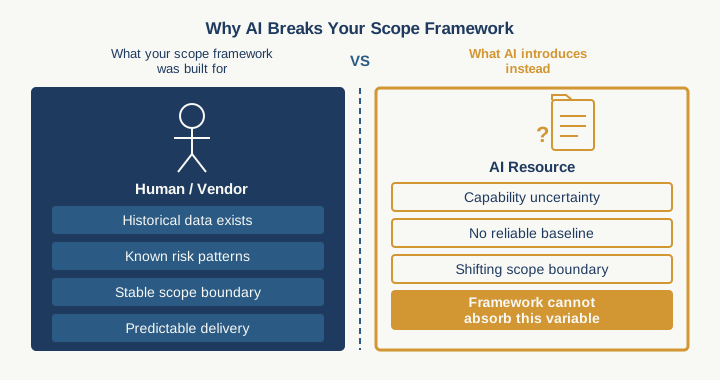
Here's what breaks down in practice. A team commits to using an AI tool to accelerate content creation or data synthesis or report generation. The scope conversation happens at a level of abstraction ("AI will handle the heavy lifting") because nobody wants to slow down the decision. Then the work starts. The AI output requires more cleanup than expected. The integration with existing systems is messier than the tool's demo suggested. Or the output quality is inconsistent enough that a human has to validate everything anyway. Scope was never actually defined. It was deferred.
The conversation you need to have is different. It's not "Will AI do this task?" It's "What part of this task will AI own, what part stays human, and where are we uncertain enough that we need a decision gate?"
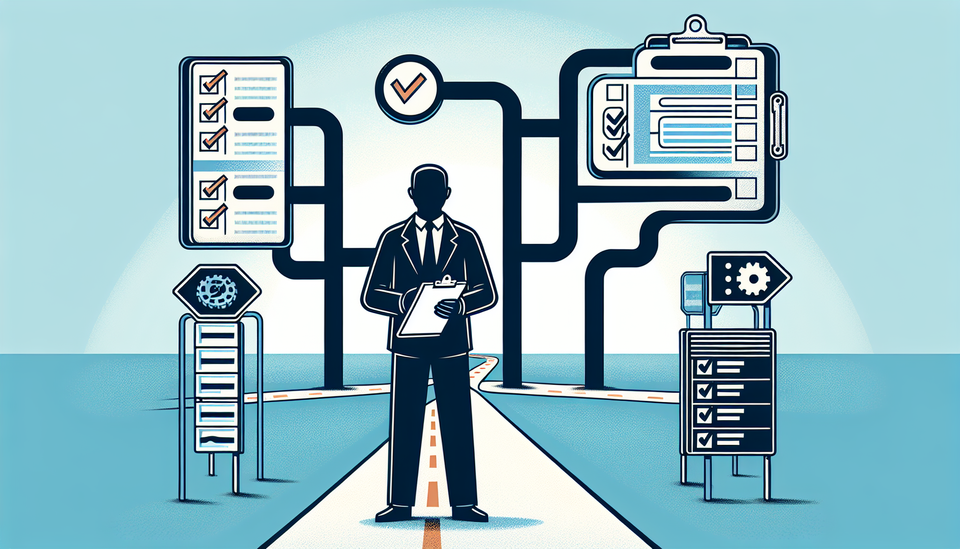
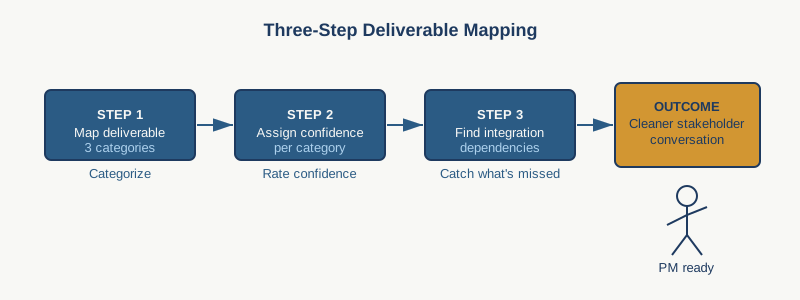
Start by mapping the deliverable into three categories. First, AI-primary work: tasks where the AI tool is doing the heavy lifting and a human reviews or refines the output. Second, AI-assisted work: tasks where a human owns the work but AI accelerates research, brainstorming, or iteration. Third, human-owned work: the judgment calls, stakeholder decisions, and quality gates that only a human should touch. Be specific about which tasks fall into which bucket.
For each category, attach a confidence level. Not a percentage. Real confidence: "This works reliably in our context based on what we've tested" or "This works sometimes and we're still figuring out when" or "We haven't tested this yet." This honesty is what kills false scope commitments.
Here's the part most teams skip: add decision gates. If an AI-primary task falls below a confidence threshold (say, the output quality drops or the integration fails), who decides what happens next? Does scope expand to add human oversight? Do you cut the task? Do you pivot to a different tool? That decision framework needs to exist before the work starts, not during the crisis call.
Then talk about integration dependencies. AI tools don't live in isolation. They connect to your existing systems, data sources, and workflows. Those connections are often where scope quietly explodes. A tool might generate excellent output in its own interface but require three days of manual data formatting to feed into Jira or Confluence or your reporting system. That's not a tool failure. That's scope you didn't account for. Name these dependencies explicitly in your scope baseline.
Use this as your scope baseline document. Create a simple table: Task name, AI role (primary / assisted / human-owned), confidence level, decision owner, integration dependencies, and fallback plan if confidence drops. Share it with the team and stakeholders. This is not a risk register. It's a clarity document. It makes scope visible in a way that "use AI for X" never does.
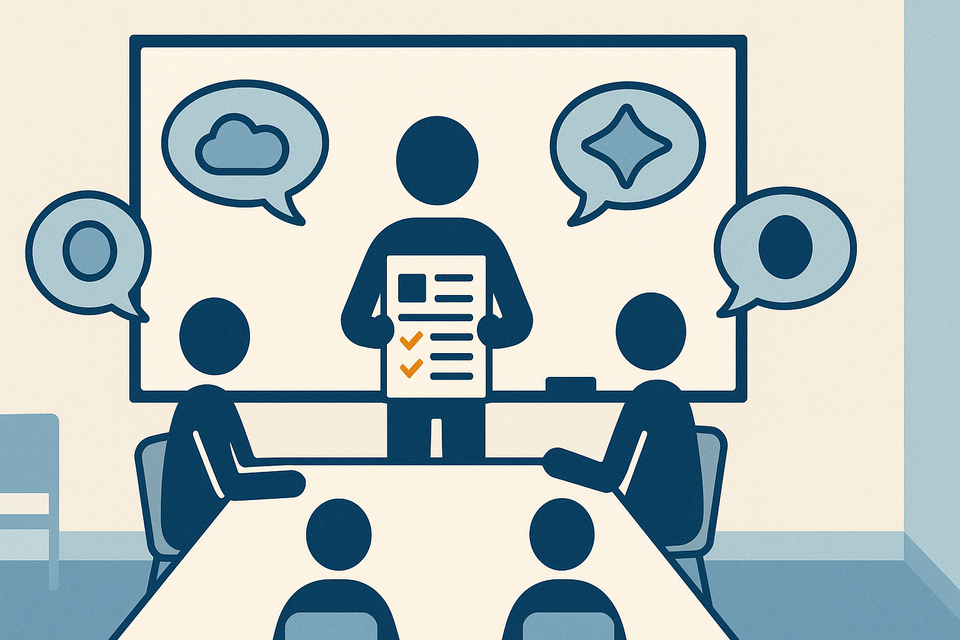
The conversation with your team shifts immediately. Instead of optimistic handwaving, you're naming what you don't yet know and who decides how to handle it. That's scope management working the way it should.
The conversation with stakeholders changes too. You can say, "Here's where AI accelerates our timeline. Here's where we're still figuring out reliability. Here's the decision gate if that changes." That's confidence-building. It's not "we're still testing"; it's "we have a plan for what happens if testing changes things."
The real gain here isn't speed. It's predictability. When scope includes explicit confidence levels and decision gates, you stop discovering scope gaps in week three. You surface them before commitment.
Try this on your next project where AI is part of the execution plan. Map one deliverable through the three categories. Get your team to agree on confidence levels. Identify one integration dependency that usually gets missed. Then watch how much cleaner the conversation with stakeholders becomes.
What's the one scope conversation with AI that's been fuzzy in your work right now? Start there.
Practical AI intelligence for project managers. Weekly, free. Get frameworks, tools, and decisions that help you stay ahead of AI adoption on your projects. No hype. No filler. Subscribe free →