Why AI Agents Fail Without Complete Business Context
Your data is sitting in three different systems. Your AI tools can see one of them.
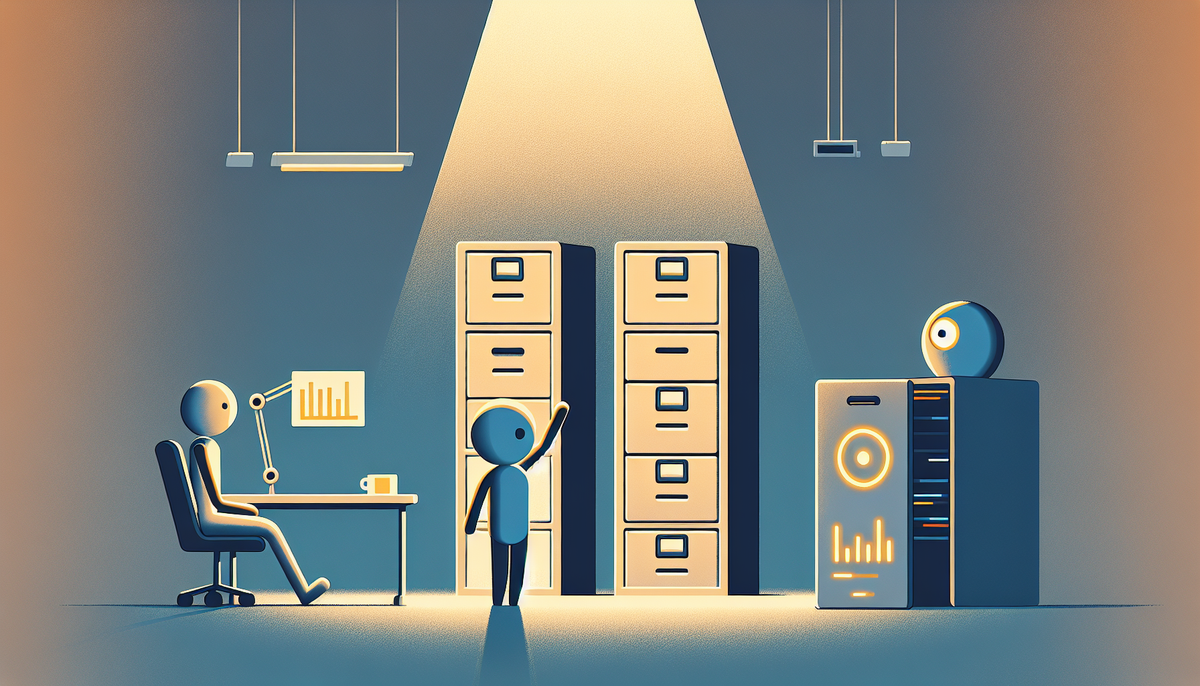
Your data is sitting in three different systems. Your AI tools can see one of them. And your stakeholders are waiting for an answer you could have had yesterday if the AI actually knew what it was looking at.
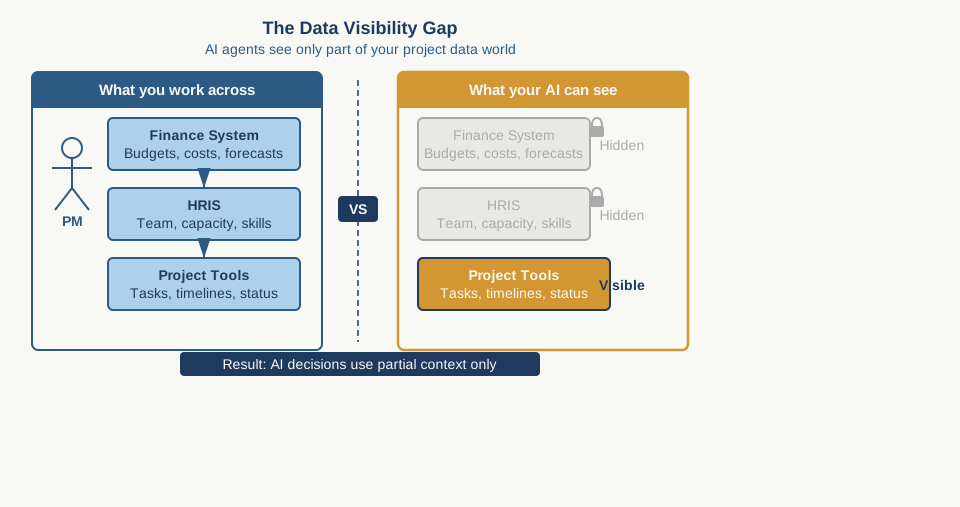
That is the real problem Google is trying to solve with Agentic Data Cloud, and it matters more than the technical announcement itself. The pitch is straightforward: AI agents are smarter when they can access complete, current business context. But for a project manager, that translates into something more urgent. Right now, your AI assistants are operating partially blind. They cannot pull real-time budget data from your finance system while checking resource availability in your HRIS while reviewing project risks in Jira. So you stay in the middle, manually connecting the dots, translating between systems, confirming what the AI thinks it knows.
Google's framework treats data infrastructure as the connective tissue that lets AI agents actually understand your project landscape instead of guessing at it.
Here is why this matters. Every project status update you write involves data archaeology. You check the timeline tool. You look at the budget tracking sheet. You scan Slack for blocker mentions. You ask for an email update from the offshore team. Then you synthesize it into a narrative for your steering committee. A properly connected AI agent could walk through your entire data landscape, assemble that same picture, and flag what needs human judgment. But that only works if the agent knows where your data lives and has permission to look.
Most enterprises today have data scattered across incompatible systems. Finance uses one tool. Your project portfolio lives in another. Team capacity is tracked in a third. Your HRIS is a fourth. Traditional data warehouses were built for analytics and reporting, not for feeding autonomous agents real-time context. So when you ask your AI tool a question that actually requires cross-system insight, it fails quietly. It gives you a partial answer based on whatever it can see. And you do not always notice the missing piece until it is too late.
Google's angle here is governance and connectivity. The Agentic Data Cloud is designed to let enterprises give AI agents access to the right data sources without opening up security nightmares or compliance violations. That is the harder problem than the AI itself.
For you, the practical implication is this: your next generation of AI tools in project management will only be as good as your data infrastructure decision right now. If you invest time in connecting your systems properly, your AI becomes a reliable assistant. If you skip that work, AI stays in the toy category.
Start by auditing what data your team actually needs to make decisions faster. Not everything. The things that slow you down right now. Maybe it is waiting for capacity numbers before you can commit to a milestone. Maybe it is pulling together risk data from six different status reports. Maybe it is chasing down budget burn rates that should be automated. Name three things.
Then map where that data actually lives today. Is it in Jira? Confluence? A Google Sheet in someone's drive? A Smartsheet you have not looked at in six months? This part is less glamorous than AI, but it matters more. You cannot connect what you have not inventoried.
Third, look at which of your current AI tools could actually work if they had that data. ChatGPT cannot see your budget tracker unless you tell it to, and then you are copying and pasting manually. But if you have a proper data layer, tools like BigQuery or similar enterprise data platforms can create connectors that let AI tools pull what they need without human handoff.
The honest constraint: this is an infrastructure play, which means it takes longer than downloading a new app. You need your engineering team or a data partner involved. You need someone to think about permissions and data freshness. That is friction. But it is also why most companies are not doing it yet, which means you have a window to move faster than your competitors if you take it seriously.
Do not wait for your CIO to hand you a finished data platform. Start smaller. Pick one workflow where you are stuck between data sources. Identify the three or four systems that matter. Ask whether there is a way to automate the connection. You might not need Google's enterprise solution yet. You might just need a simple Zapier flow or a native integration between tools you already own.
The point is to stop treating data visibility as a someday infrastructure problem and start treating it as a delivery problem. Because that is what it is. Every day your AI tools are making decisions on incomplete information is a day your delivery decisions are also incomplete.
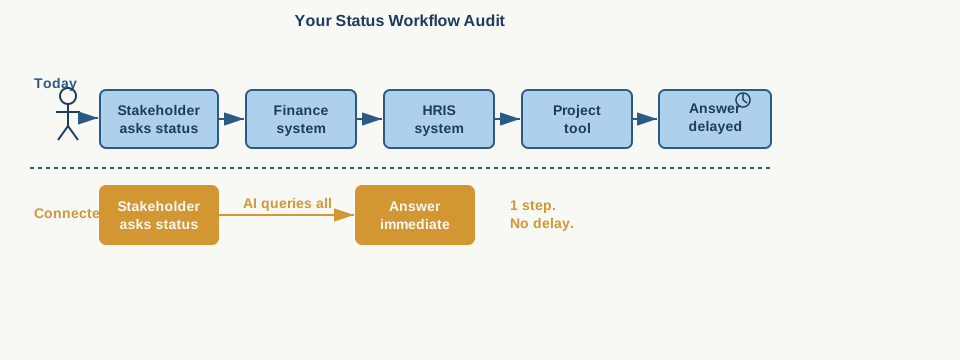
Pick one status workflow this week. Track how much time you spend pulling data from multiple systems. Then imagine what you could do with that time if the data just flowed to your AI tool automatically. That is not a technical question anymore. That is a PM question. And that is what makes this worth your attention.
Practical AI intelligence for project managers. Weekly, free. Get frameworks, tools, and decisions that help you stay ahead of AI adoption on your projects. No hype. No filler. Subscribe free →
Not sure which AI tools to trust on your projects? Download the free AI Tool Evaluation Checklist: 12 questions PMs ask before approving any AI tool for their team. Download free →