How to Map the Stakeholders Your AI Tool Can't Find
You finished the steering committee meeting feeling good. Everyone agreed on the timeline.
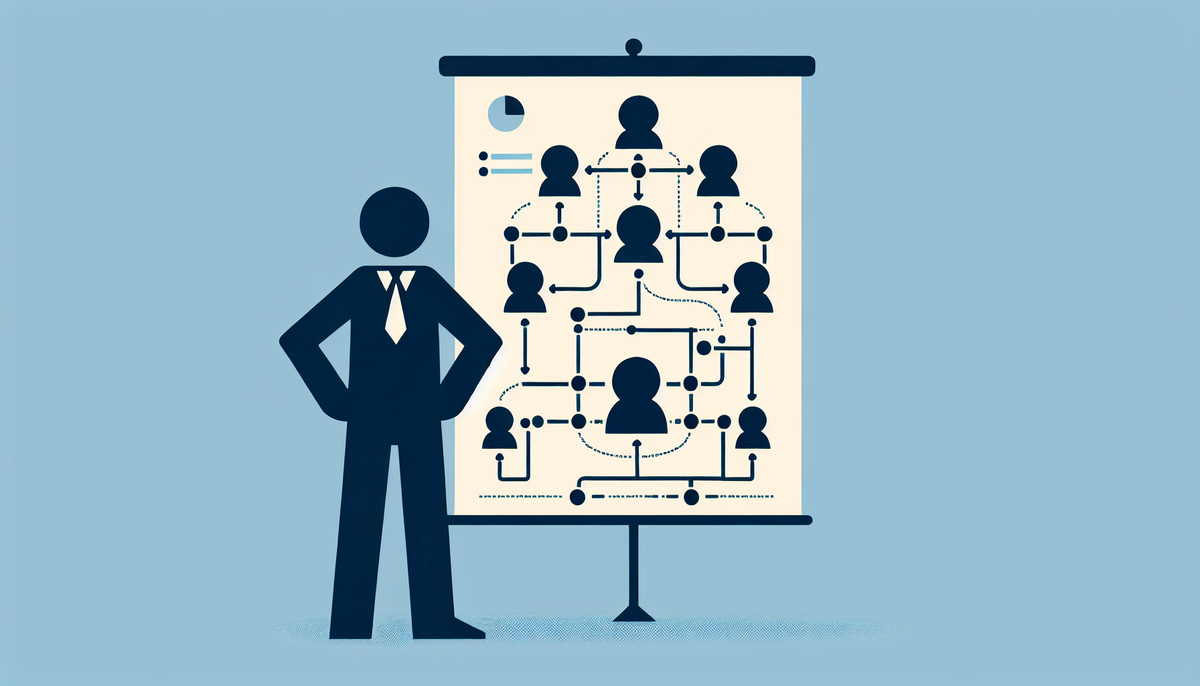
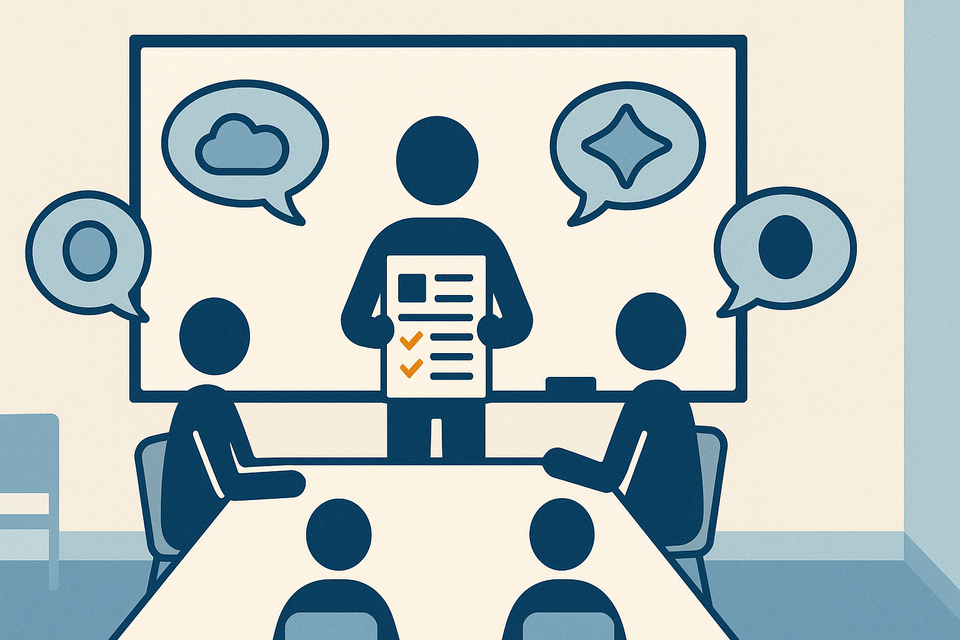
You finished the steering committee meeting feeling good. Everyone agreed on the timeline. The CFO signed off on budget. Three senior stakeholders nodded in unison. And then, three weeks later, one of them casually mentioned in a hallway conversation that they had concerns about resource allocation that "didn't quite come up in the meeting." Suddenly you're in a recovery conversation that should have happened weeks ago. The problem was not what was said in the room. It was who was actually in the room.
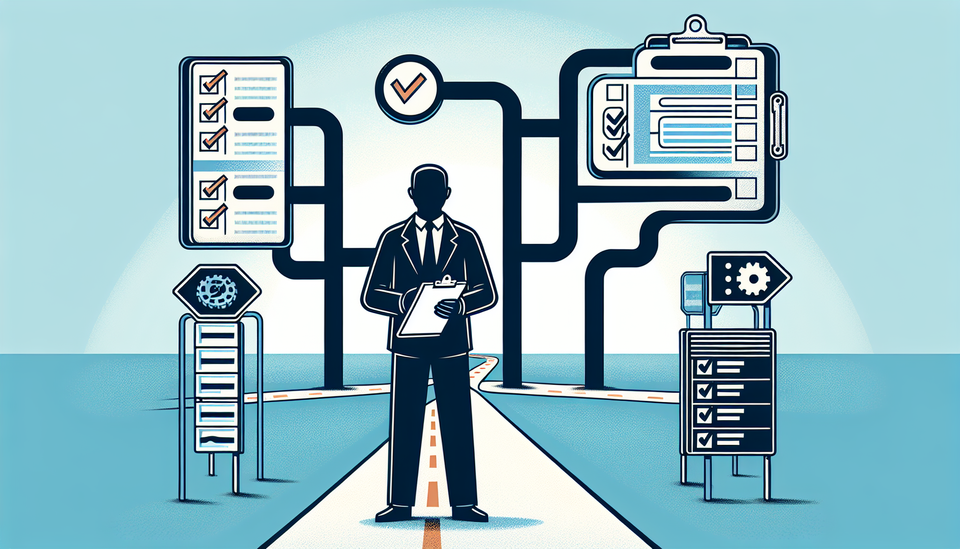
Most project managers still navigate stakeholder terrain using org charts and a gut sense of politics. You know the CEO matters. You know the department head matters. You assume the finance person sitting in the corner is purely advisory. And you miss the person who has not said a word but whose sign-off will make or break your critical path. That person exists on every project. They are sitting at your table, and you do not know it.
Here is what is really happening. Your formal stakeholder list comes from a charter document written months ago. It reflects hierarchy and job titles, not influence. Meanwhile, the actual decision-making network has shifted. Someone in operations has veto power you did not know about. A domain expert buried three layers down is blocking progress but has not surfaced it in official channels. A sponsor's deputy has become the real decision-maker while the sponsor is distracted. Your engagement strategy is built on fiction.
The cost of getting this wrong is not small. You over-communicate with people who do not shape outcomes. You under-invest in relationships that actually matter. You miss early warning signs because you are not listening to the right conversations. By the time you realize the real stakeholder map has moved, you are in firefighting mode instead of steering mode.
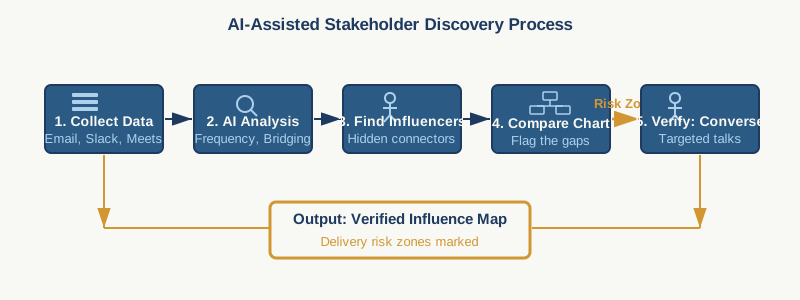
This is where your current tools actually fail you. Your project management platform knows who is assigned to tasks. Your email shows you who replies fastest. Your calendar tells you who attends meetings. None of that tells you who shapes decisions or whose resistance will sink you. You are optimizing for visibility when you should be optimizing for influence.
AI changes this in a specific way. Tools that analyze communication patterns, meeting attendance data, and document access can reveal the actual decision-making network hidden beneath your org chart. You can see which stakeholders initiate conversations about your project, who responds to whom, whose opinions shift others' minds, and whose concerns get dismissed or escalated. This is not guessing. This is pattern recognition at a scale you cannot do manually.
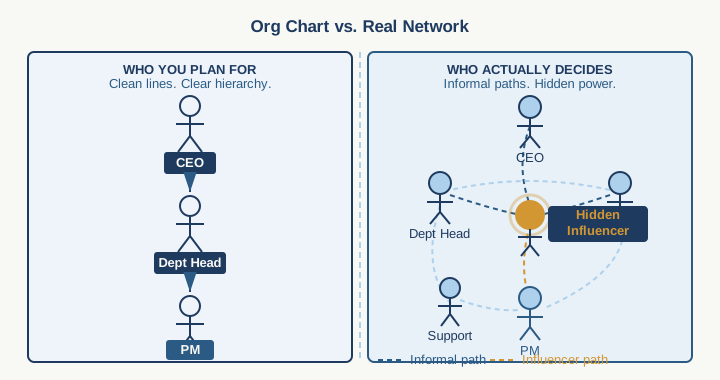
Tools like Slack analytics, email metadata analysis through platforms like Notion AI or your native Teams data, and meeting transcripts from Otter.ai or Fireflies can surface these patterns. Feed them your project communications over the last quarter, and they will show you clustering: who talks to whom, who has talked about your project across different groups, and who holds bridge positions between departments. These are your hidden stakeholders.
The tool is not magic. It does not understand context or politics. It cannot tell you why someone is influential, only that they are. It misses offline conversations and the weight of historical relationships. But what it does do is eliminate the blind spots that gut instinct and org charts create. It gives you a starting point for a conversation with your team: "These five people show up consistently in our project communications. Are we engaging them correctly?"
Once you have mapped the actual network, the second move is straightforward but usually missed. Segment your stakeholders not by title but by influence pattern and interest trajectory. Some matter intensely but only for certain decisions. Some have light touch influence but will spike when their domain is affected. Some are blockers masquerading as advisors. AI-driven analysis can flag these patterns and alert you when a stakeholder's engagement suddenly changes.
Real-time sentiment tracking is the third layer. Most PMs learn about stakeholder resistance through grapevine or escalation. By then, the decision has calcified. Natural language processing on your Slack channels, email, and meeting transcripts can surface tone shifts before they become problems. Not surveillance. Signal. When someone's language around your project shifts from collaborative to cautious, that is worth a conversation before it becomes an objection.
Here is how to start this week. Export your last two months of project email and Slack conversations. Run them through ChatGPT with this prompt: "Identify the top ten people mentioned in these messages or who initiated conversations about this project. For each person, count how many times they appear, whether they asked questions or made statements, and whether the sentiment shifted over time. Show me the results in a table." You will get a rough map in ten minutes. Do not treat it as gospel. Treat it as a hypothesis.
Take that list to your project sponsor or team lead. Ask one question: "Are we engaging these people correctly?" The answer will tell you more than any org chart. You will either confirm you knew the network correctly, or you will discover a gap. That gap is where your delivery risk actually lives.
Do this exercise on your next project kickoff, not after you are already in trouble. The stakeholder map that matters is not the one you draw on day one. It is the one you discover through actual interaction and verify through communication data. Build that muscle now.
Practical AI intelligence for project managers. Weekly, free. Get frameworks, tools, and decisions that help you stay ahead of AI adoption on your projects. No hype. No filler. Subscribe free →
Stop writing from scratch. Get the 20 prompts PMs actually use for status reports, stakeholder updates, and retro summaries. Download free →